
You Might Already Be Dead
“Get away with you and die!” — Ivan Ilyich, in Leo Tolstoy's The Death of Ivan Ilyich

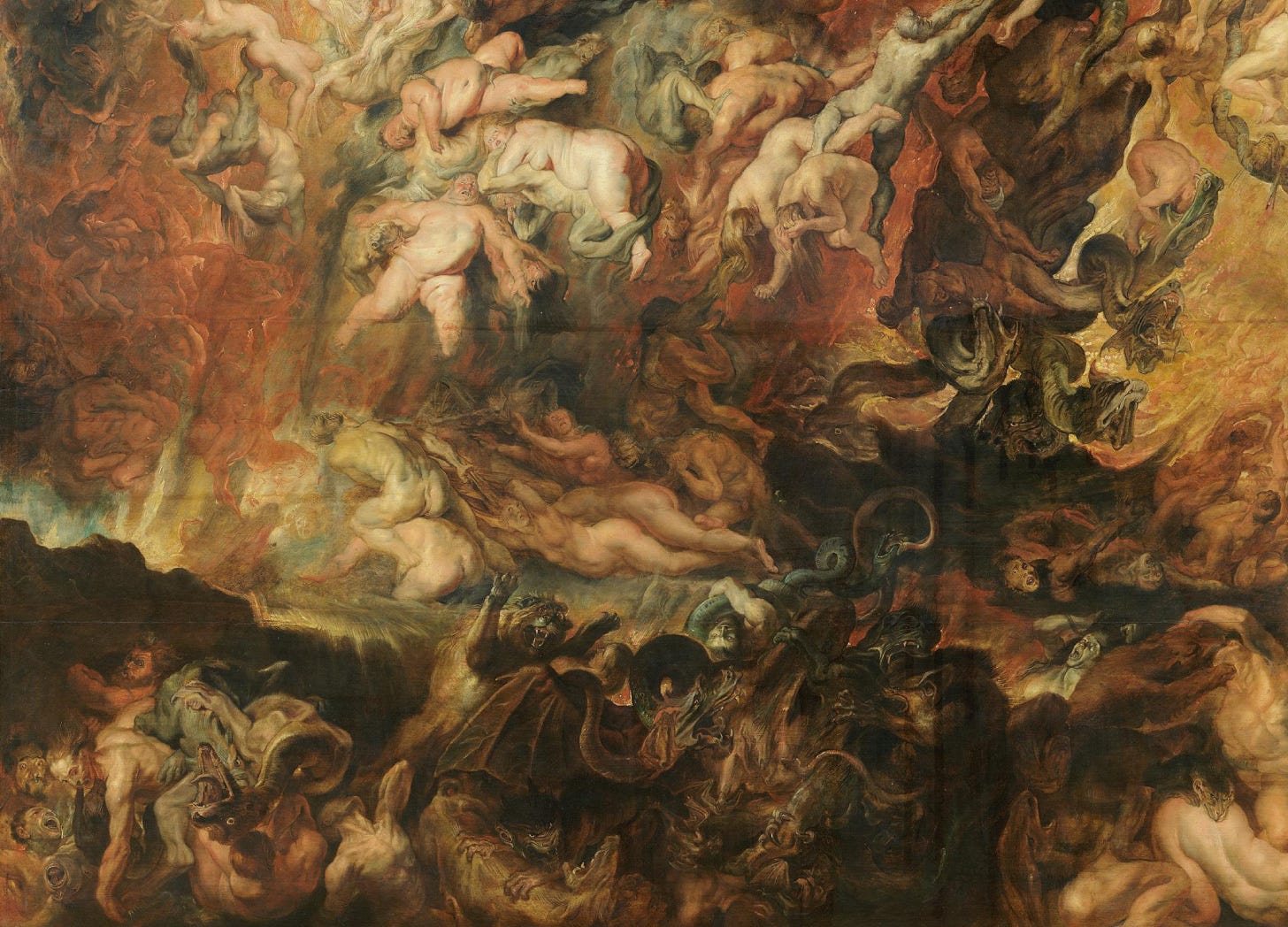
Eventually you will have no more time, and every cast-off moment that went unappreciated or ill-used will suddenly be clothed in eternal meaning and regret and cause you great anguish. You accumulate more of these moments every day, even if your goal is to minimize their accumulation — and sometimes because this is your goal, accidentally sparking an ironic cycle of worry that precludes any attention to the current, passing moment and therefore piles one lost second after another onto the rotting heap.
Drip,
drip,
drip...
I seem to have sprung a thousand tiny self-inflicted leaks. I cannot continue robbing myself of my own life!
These losses are made more painful by inevitable times in even the most abject or poorly led lives that are deeply good and fully felt, which serve as force multipliers by contrast on their blank, numb, and wretched counterparts.
“And once again his thoughts dwelt on his childhood, and once again that was painful for Ivan Ilyich, and he tried to banish those thoughts and think of something else.”
— Leo Tolstoy, The Death of Ivan Ilyich
I dreamt several days ago that I was being sentenced to 100 years in some international prison for an amorphous crime that I did not realize I had committed. It dawned on me that I would be permanently separated from my wife, that my remaining hopes and ambitions had been dashed, and that there was no longer any “after” on this side of death’s door to look forward to; I panicked at this claustrophobic dread of the irrevocably closed opportunity window.1
In these moments of acute awareness when the veil of habituation is drawn back and the fleeting preciousness of your chance at living is revealed to you in glory, there emerges for me a sequential swelling of desire, sense of urgency, and disorienting fear. I am alive and continually in the midst of living, hurtling toward dying alongside a cascade of sand from some unknowably sized upper bulb, desperate to make the most of my descent but simultaneously directionless and paralyzed by infinite choice.
The gaunt and dying Ivan Ilyich asks himself, “What do you want now? To live? To live how?” He has not yet accepted the truth that his life was wrong, though he already feels its torment.
If I immerse myself in awareness, perhaps my soul will absorb through attentive living whatever important existential essences have been put on my path, pleasurable or painful, and the truths reflected by these might guide me in a kind of spiritual calibration and course-correction feedback loop. What good is living life as a deluded and self-coddled absentee? You are cheating yourself and those who might have benefited from the better nature of your counterfactual versions.2 Unconscious living — whether a slack-mouthed, bovine stumbling around or an addiction to constant erratic distraction — leaves undue room for the meddling of Uncle Screwtape types.
There seem to be two key elements — both necessary, and neither independently sufficient — of a life well-lived. First, the correct central orienting principle, and second, its moment-to-moment attentive implementation. Without the former, you will be lost; without the latter, you will be unconscious and self-defeating.
Ivan Ilyich had, as he came to realize, a decidedly wrong central orienting principle: propriety over all else (an obsession with the code of comme il faut) and the vapid imitation of high-status bureaucrats who were in turn imitating each other; ghosts chasing ghosts. Ivan was shown in the course of dying “everything that had shaped his life; and he saw clearly that all this had been wrong, that everything had been a huge and terrible deception, which had shut out both life and death.”
Keep reading with a 7-day free trial
Subscribe to Up and Over to keep reading this post and get 7 days of free access to the full post archives.